


India–EU FTA: after years of negotiations, the agreement takes shape

Updated: Jan 28

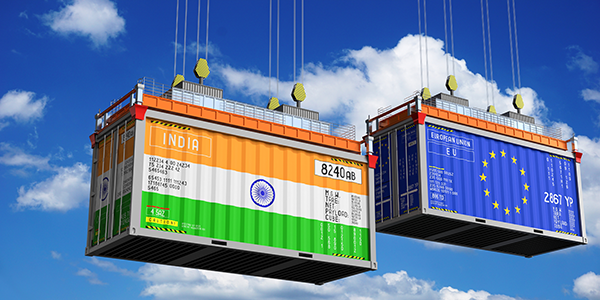
Image courtesy NDTV online
A long negotiation enters a decisive phase.
After many years of complex discussions and repeated interruptions, the India–European Union Free Trade Agreement is now clearly taking shape. The recent India–EU Summit marks a turning point in a process that had long been considered difficult to conclude, reflecting deep differences on market access, regulation and sustainability. Today, the agreement is moving from political intent to a concrete economic framework.
An underappreciated economic relationship.
Few are aware that the European Union is already India’s primary trading partner and its largest source of foreign direct investment, with bilateral trade in goods and services reaching approximately USD 190 billion in 2024–25. The prolonged absence of a comprehensive trade agreement has therefore been striking. The FTA does not create a relationship from scratch, but seeks to structure, stabilise and deepen one of the most important economic partnerships India already has. Based on available estimates, the full implementation of the FTA could result in annual export gains of up to EUR 20 billion for the EU market in India and EUR 4–5 billion for Indian exports to the EU.
A strategic rationale beyond tariffs.
The renewed momentum behind the FTA reflects broader global shifts. For the European Union, India has become a key partner in diversifying supply chains and reducing strategic dependencies. For India, the EU represents a high-value export market and a long-term source of investment, technology and know-how. As a result, the FTA has evolved into a strategic partnership instrument rather than a narrow trade-liberalisation exercise.
Substantial progress on the structure of the agreement.
Following the Summit, negotiators confirmed that most chapters of the agreement have been agreed in principle. While final legal texts and tariff schedules are still being completed, this signals that the overall architecture of the FTA is largely defined, with negotiations now focused on a limited number of sensitive areas.
Trade facilitation and regulatory cooperation at the core.
Among the areas where convergence has reportedly been achieved are customs procedures, trade facilitation, rules of origin, dispute settlement and regulatory cooperation. These elements are critical for businesses, as they determine how predictable, transparent and usable the agreement will be in practice, often with a greater impact than tariffs alone.
Merchandise likely to benefit in the first phase.
Although official schedules have not yet been published, press coverage following the Summit has begun to converge on specific merchandise categories expected to feature among the first tangible outcomes of the FTA.
On the European export side, these include:
automobiles and auto components
spirits and wine,
olive oil and selected vegetable oils,
processed food products,
industrial machinery,
chemicals and pharmaceuticals.
On the Indian export side, improved access to the EU market is expected for:
textiles and apparel,
footwear and leather goods,
gems and jewellery,
engineering goods,
chemicals
selected processed foods.
Sensitive areas still requiring political calibration, including CBAM.
Notwithstanding this progress, some issues remain particularly sensitive. Automotive market access, alcoholic beverages and certain agricultural products continue to require careful political balancing. In addition, climate-linked trade measures — notably the interaction between the FTA and the EU’s Carbon Border Adjustment Mechanism (CBAM) — remain an area of active discussion. While CBAM is not expected to be diluted through the FTA, the agreement is likely to provide a framework for dialogue, transparency and gradual alignment, with significant implications for carbon-intensive sectors.
Data protection and financial services as structural issues.
Personal data protection, historically a deal-breaker in India–EU negotiations, has seen progress at the domestic level in India but is not fully resolved within the FTA framework. Similarly, financial services and banking infrastructure are addressed primarily through cooperation and regulatory dialogue rather than mutual recognition.
From negotiation to preparation.
As the agreement moves towards signature and implementation, companies should view the current phase as a preparation window. Understanding future tariff scenarios, regulatory requirements — including sustainability and CBAM-related compliance — and partnership opportunities will be essential to fully benefit once the FTA enters into force. The Indo-Italian Chamber of Commerce and Industry will continue to support its members throughout this transition.
IICCI - Marketing & Media Department


There is a lot to appreciate about this article, especially its simple presentation and useful explanations. The writer has focused on information that readers are likely to care about and explained it without unnecessary complexity. I liked the way the article maintains a natural flow while covering different aspects of the subject. It gives readers a useful foundation and encourages further exploration without making the content feel overwhelming.
Big Mumbai game login
I usually notice when a gaming platform regularly improves its features. Updates can make navigation easier, improve performance, and resolve technical issues. I appreciate improvements that actually help players instead of simply changing the appearance. Clear communication about important updates is also useful. A platform that continues refining its experience can become more enjoyable over time and easier to use for returning players.
ganga club
This is an interesting update on the India-EU FTA negotiations and the potential impact of closer economic cooperation. Agreements like this can create new opportunities for trade, businesses, and international partnerships. On a lighter seasonal note, Halloween Costume 2026 ideas could also be a fun topic for a future post.
Calendario de Sorteos ofrece información muy útil para quienes siguen resultados y horarios. Este testimonio es realmente inspirador, demuestra que hablar sobre la salud mental puede transformar vidas y generar conciencia. Gracias por compartir una experiencia tan valiente que motiva a muchas personas a buscar apoyo y esperanza.
Greetings everyone. I found a Reddit thread discussing welcome offers for the IN cricket season. I hate reading confusing terms and conditions. The simple breakdown of wagering rules here interested me immediately. I learned exactly how to clear the Mostbet promo code without losing my mind. I am very satisfied because I successfully converted the promo funds into real withdrawable cash. It is rare to see such honest explanations online.